What Emergency Food Actually Costs Per Calorie
Figures last verified
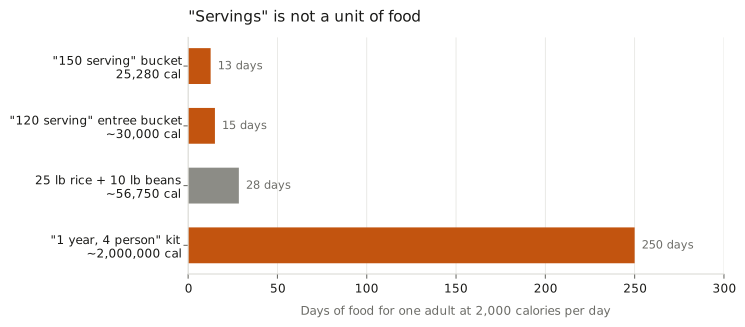
A popular emergency food bucket sells for about eighty dollars and advertises 150 servings. It contains 25,280 calories.
At two thousand calories a day, that is twelve and a half days of food for one adult. Not 150 days. Not five months. Twelve and a half days, for eighty dollars, which works out to about six dollars and thirty cents per person per day.
The same eighty dollars spent on bulk rice and beans buys roughly a hundred and forty thousand calories, or seventy days for one adult.
That gap is the entire subject of this page. The emergency food industry sells in servings, and a serving is not a unit of anything. Once you convert everything to calories, which is the only unit that matters when the shops are shut, the comparisons change dramatically.
Why servings are a meaningless unit
There is no standard defining an emergency food serving. It is whatever the manufacturer decides to call one, and manufacturers face a direct commercial incentive to make that number as large as possible, because "150 servings" sells better than "twelve days."
The result is a wide range in what a serving actually contains. Across the major brands, servings run from roughly 100 calories at the low end to 300 or more for staple products like oats, rice, and beans. That means two buckets advertising the same serving count can differ by a factor of three in the food they hold.
An adult needs roughly 2,000 calories a day, and considerably more if doing physical work in cold weather, which is exactly the scenario most of this food is sold against. At 150 calories per serving, feeding one adult for one day takes thirteen servings. A 150 serving bucket is therefore eleven and a half days, not 150 days, and not the five months the number implies.
The conversion is simple and it is the first thing to do with any product in this category. Find the total calorie count, which manufacturers are required to disclose even when they bury it, and divide by 2,000. That gives you person-days. Then divide the price by person-days.
The cost per calorie, ranked
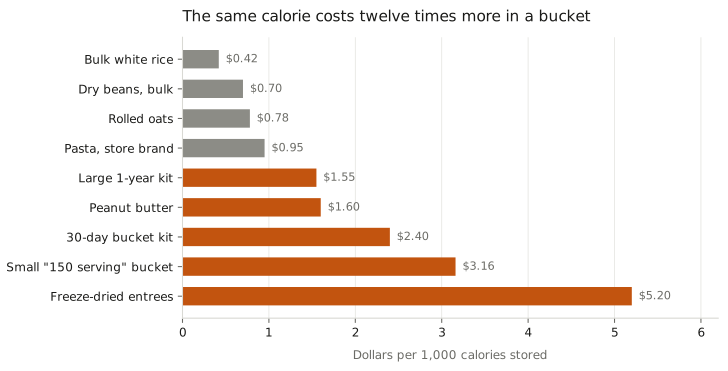
Once every option is expressed in the same unit, the ordering is stark and it holds across brands.
| Option | Approximate cost per 1,000 calories | Approximate cost per person-day |
|---|---|---|
| Bulk white rice | $0.42 | $0.84 |
| Dry beans, bulk | $0.70 | $1.40 |
| Rolled oats | $0.78 | $1.56 |
| Pasta, store brand | $0.95 | $1.90 |
| Large one-year kit | $1.55 | $3.10 |
| Peanut butter | $1.60 | $3.20 |
| Thirty-day bucket kit | $2.40 | $4.80 |
| Small 150-serving bucket | $3.16 | $6.32 |
| Freeze-dried entree pouches | $5.20 | $10.40 |
White rice is the cheapest storable calorie available to a household by a wide margin, and it also stores for twenty-five to thirty years sealed in mylar with an oxygen absorber. That combination of cost and longevity is why it appears in every serious long-term storage plan and why it is the benchmark everything else should be measured against.
The freeze-dried products at the bottom of that table cost roughly twelve times as much per calorie as the rice at the top.
Two notes on the arithmetic. Bulk staple prices vary regionally and with commodity markets, so the figures above are representative rather than fixed. And the kit prices reflect regular pricing rather than sale pricing, which matters because the major brands run frequent and substantial discounts, sometimes closing a third of the gap.
What the expensive options actually buy
The rice comparison makes freeze-dried food look absurd, and that is not quite fair. It buys four things, and whether they are worth the premium depends on your situation rather than on arithmetic alone.
No cooking beyond hot water. Freeze-dried meals rehydrate with water, sometimes cold water at a cost in time and texture. Rice needs roughly a two-to-one water ratio and twenty minutes of sustained heat. In a scenario where fuel is scarce or you have no safe way to cook, that difference is real. It is also the single strongest argument for keeping some of the expensive food, and it connects directly to whether you have solved heating and cooking without grid power.
Water efficiency. A pound of dry beans takes several cups of water to soak and cook. Freeze-dried meals typically need less water per calorie delivered. In a water-constrained event that matters, though it matters less than the marketing suggests.
Variety and morale. Eating rice and beans for three weeks is nutritionally survivable and psychologically grim. Households with children in particular find this out quickly. Some proportion of palatable, familiar food is not a luxury in a long event.
Zero effort at the worst moment. During the first forty-eight hours of a genuine emergency, nobody wants to be soaking beans. Ready-to-eat and add-water-only food removes friction exactly when friction is most expensive.
That is a real list. It argues for a layer of expensive food, not for a pallet of it.
Where the one-year kits fall down
The large kits are better value per calorie than the small buckets, because bulk pricing works the same way it does everywhere. A one-year, four-person package running four to eight thousand dollars typically works out to somewhere between one and three dollars per thousand calories, which is considerably better than a small bucket.
They fail on a different axis, and the industry itself will occasionally admit it: most households never eat them. The kit goes into a basement, gets forgotten, and approaches its shelf life expiry with most of the food untouched.
That produces two problems. The obvious one is that thousands of dollars have been converted into a garage ornament. The subtler one is that nobody knows whether they can actually cook it, whether their family will eat it, or whether the calorie math the manufacturer used matches their household. A food supply that has never been tested is a plan that has never been tested.
There is also a calorie-density issue worth checking before buying any large kit. Several popular packages, when divided into their claimed duration, deliver well under 2,000 calories per person per day. A kit sold as thirty days may contain twenty days of adequate calories, or thirty days of substantial deficit. Do the division yourself rather than trusting the label.
What actually makes sense
The layered approach costs less than most single purchases and covers more.
Layer one, the deep pantry. More of what you already eat, stored properly, rotated through normal use. Canned goods, rice, pasta, oil, tinned fish, peanut butter. This costs nothing extra over time because you are buying the same groceries earlier rather than different groceries. It covers the disruptions that actually happen, which are measured in days to weeks. And it never expires forgotten, because you eat it.
Two to four weeks of this is the right first target for almost every household, and the reasoning behind that number is in where the three days of food figure comes from.
Layer two, bulk staples in long-term storage. Rice, oats, beans, salt, sugar, honey, in mylar with oxygen absorbers inside food-grade buckets. This is the cheapest insurance available per calorie and it keeps for decades. What genuinely lasts and what quietly does not is covered in what actually lasts 25 years in storage, and the short version is that anything with fat in it does not.
Layer three, a small amount of ready-to-eat and add-water food. Enough to cover the first few days without cooking, and enough variety to keep morale intact in a longer event. This is where the expensive products earn their place, in a supporting role rather than as the foundation.
Priced out, a household can build all three layers for a fraction of what a single one-year kit costs, and the result is more usable, more nutritionally sensible, and considerably more likely to actually get eaten.
The one thing to check before any purchase
Total calories, divided by 2,000, divided by the number of people. That gives you person-days. Then divide the price by person-days.
Every product in this category will tell you the total calorie count if you look for it, because nutritional labelling requires it. Very few will put it on the front of the box, because the number is smaller and less impressive than the serving count.
Doing that division takes thirty seconds and it is the single most useful habit in this entire subject. It will also, reliably, make several products you were considering look considerably worse than they did a minute earlier.
Sources
- Manufacturer nutritional labelling and published product specifications for ReadyWise, Augason Farms, Mountain House and Legacy Food Storage
- USDA FoodData Central for calorie densities of bulk staples
- Retail pricing observed July 2026; bulk commodity prices vary regionally and seasonally
Related: What actually lasts 25 years in storage covers packaging, oxygen absorbers and which foods genuinely survive. Where the three days of food figure comes from covers how long a realistic disruption lasts.
Last verified: July 2026